

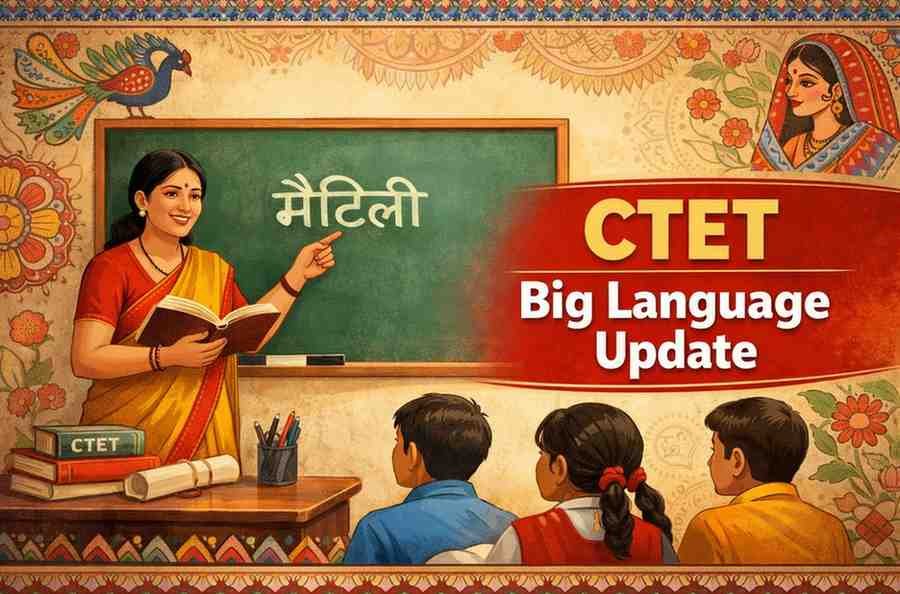
Maithili language is likely to be included in the Central Teacher Eligibility Test (CTET), according to recent developments and growing demands from educators, linguists, and regional representatives. If implemented, this move could mark a significant milestone for linguistic inclusion in India’s teacher recruitment ecosystem and open new opportunities for thousands of Maithili-speaking aspirants, particularly from Bihar and parts of Jharkhand.
This development is gaining attention on Google Discover because it sits at the intersection of education policy, regional language recognition, teacher recruitment, and cultural identity. For CTET aspirants, this is not just an administrative update but a potentially career-shaping change.
In this detailed article, we break down everything you need to know: what CTET is, why Maithili’s inclusion matters, the current status, possible timelines, benefits for candidates, challenges, and what aspirants should do next.
Understanding CTET and Its Language Framework
The Central Teacher Eligibility Test is a national-level examination conducted to determine the eligibility of candidates for teaching positions in Classes I to VIII in central government schools such as Kendriya Vidyalayas, Navodaya Vidyalayas, and other institutions that accept CTET scores.
CTET includes language papers to assess a candidate’s ability to teach in a particular medium. Traditionally, the list has focused on major Indian languages. However, with changing educational priorities and a push for inclusivity under the National Education Policy, the scope of regional language representation is expanding.
The likely inclusion of Maithili signals a shift toward ground-level linguistic realities, especially in regions where Maithili is widely spoken and used in early education.
What Is the Maithili Language?
Maithili is one of the oldest Indo-Aryan languages, with a rich literary tradition dating back several centuries. It is primarily spoken in:
- Northern Bihar
- Parts of Jharkhand
- The Mithila region
- Some areas of Nepal
Maithili is recognized as one of the 22 scheduled languages of India under the Eighth Schedule of the Constitution. Despite this constitutional recognition, its presence in national-level competitive examinations has remained limited.
Including Maithili in CTET would align practice with constitutional intent.
Why Maithili’s Inclusion in CTET Is Important
1. Linguistic Inclusion and Equity
Teacher eligibility exams directly influence who gets to teach children. When the exam language options are limited, capable candidates from regional-language backgrounds are often disadvantaged. Adding Maithili creates a more equitable playing field.
2. Better Learning Outcomes for Students
Students learn best in their mother tongue, especially at the primary level. Teachers proficient in Maithili can explain concepts more effectively, leading to better comprehension and retention.
3. Alignment with National Education Policy
The National Education Policy emphasizes mother-tongue-based education, especially in the foundational years. Including Maithili in CTET supports this vision in a practical, measurable way.
4. Cultural Recognition
Language is culture. By formally recognizing Maithili in CTET, the education system acknowledges the cultural and historical significance of the Mithila region.
Current Status: Is Maithili Officially Included in CTET?
As of now, Maithili is not officially listed as a CTET language option. However, multiple indicators suggest that its inclusion is under active consideration:
- Memorandums and representations submitted by language activists and educators
- Political and academic advocacy from Maithili-speaking regions
- Growing precedents of regional language inclusion in other examinations
This is why the phrasing “likely to be included” is crucial. Aspirants should remain alert for official notifications from the CTET conducting authority.
Expected Impact on CTET Aspirants
Increased Participation from Bihar and Jharkhand
A large number of aspirants from these states have academic backgrounds in Maithili. This change could significantly boost participation and success rates.
New Preparation Strategies
If Maithili is added, candidates will need to prepare for pedagogy and language proficiency specifically in Maithili, including grammar, comprehension, and teaching methodologies.
Opportunity for Fresh Graduates
Students who studied Maithili at the undergraduate or postgraduate level may find CTET more accessible and aligned with their strengths.
How CTET Language Papers Work
CTET typically includes two language sections:
- Language I: Chosen language of instruction
- Language II: Secondary language
If Maithili is added, it may appear as an option in either or both sections, subject to official guidelines. Candidates would then be assessed on:
- Reading comprehension
- Grammar and vocabulary
- Pedagogical understanding of language teaching
Challenges in Implementing Maithili in CTET
While the move is promising, it also involves practical challenges:
Standardization of Syllabus
Maithili has multiple dialectal variations. Establishing a standardized syllabus suitable for a national exam requires careful academic planning.
Availability of Study Material
Currently, CTET-specific preparation books and mock tests in Maithili are limited. Publishers and educators will need time to develop quality resources.
Examiner and Evaluator Training
The conducting body must ensure trained evaluators proficient in Maithili to maintain exam integrity.
Despite these challenges, none are insurmountable, especially given successful models from other regional languages.
What Aspirants Should Do Right Now
- Do not rely on unofficial sources
Only trust updates published in official CTET notifications. - Start foundational preparation
If you are a Maithili graduate or speaker, revise grammar, literature basics, and teaching pedagogy concepts. - Track notification updates regularly
Language additions are usually announced well before the exam to allow preparation time. - Avoid speculation-based coaching claims
Some coaching centers may prematurely advertise Maithili courses. Wait for official confirmation.
Broader Implications for Indian Education
The possible inclusion of Maithili in CTET reflects a broader trend toward decentralized and inclusive education policy. Over time, this approach can:
- Improve teacher quality in regional schools
- Reduce language barriers in early education
- Strengthen trust between communities and the education system
It also sets a precedent for other scheduled languages seeking representation in national examinations.
Frequently Asked Questions
Is Maithili officially included in CTET right now?
No. As of now, it is under consideration and not officially notified.
When can an official announcement be expected?
Only the CTET conducting authority can confirm timelines through official notifications.
Will Maithili be available for both Paper I and Paper II?
This will depend on the official notification and syllabus framework, once announced.
Should I start preparing in Maithili now?
If you are a Maithili background candidate, building basic readiness is sensible, but full-scale preparation should wait for confirmation.
Will this affect existing language options in CTET?
No. The inclusion of a new language typically expands options without removing existing ones.
Disclaimer
This article is based on publicly discussed developments, academic advocacy, and emerging policy signals. No official confirmation has been issued yet regarding the inclusion of Maithili in CTET. Candidates are strongly advised to rely only on official CTET notifications for final and binding information.